Commercial kitchen floor sinks, floor troughs, and trench drains are essential components of kitchen infrastructure, yet many traditional designs have remained largely unchanged for decades. As sanitation standards, operational demands, maintenance expectations, and code compliance continue to increase, drainage systems must do more than simply collect wastewater they must support consistent cleaning, inspection, and long-term performance.
At Streivor, we examined common maintenance challenges associated with traditional drainage systems and re-engineered key structural features to help operators maintain cleaner, more sanitary, and code-compliant floor sinks, floor troughs, and trench drains.
The Importance of
Mantenance & Code Compliance
Mantenance & Code Compliance
Health and Sanitation Codes
Requires equipment to be designed and manufactured to prevent the harborage of vermin and the accumulation of dirt and debris while permitting inspection, maintenance, servicing, and cleaning.
While these requirements are straightforward, many traditional trough designs can make routine maintenance more difficult than necessary. Interior ledges, standing water, and cumbersome grate removal can contribute to inconsistent cleaning and sanitation practices. To address these challenges, Streivor focused on redesigning the floor trough itself.
5° Pitched Trough Pan
The Challenge
Health and Sanitation Codes require floor sinks to be self-draining.
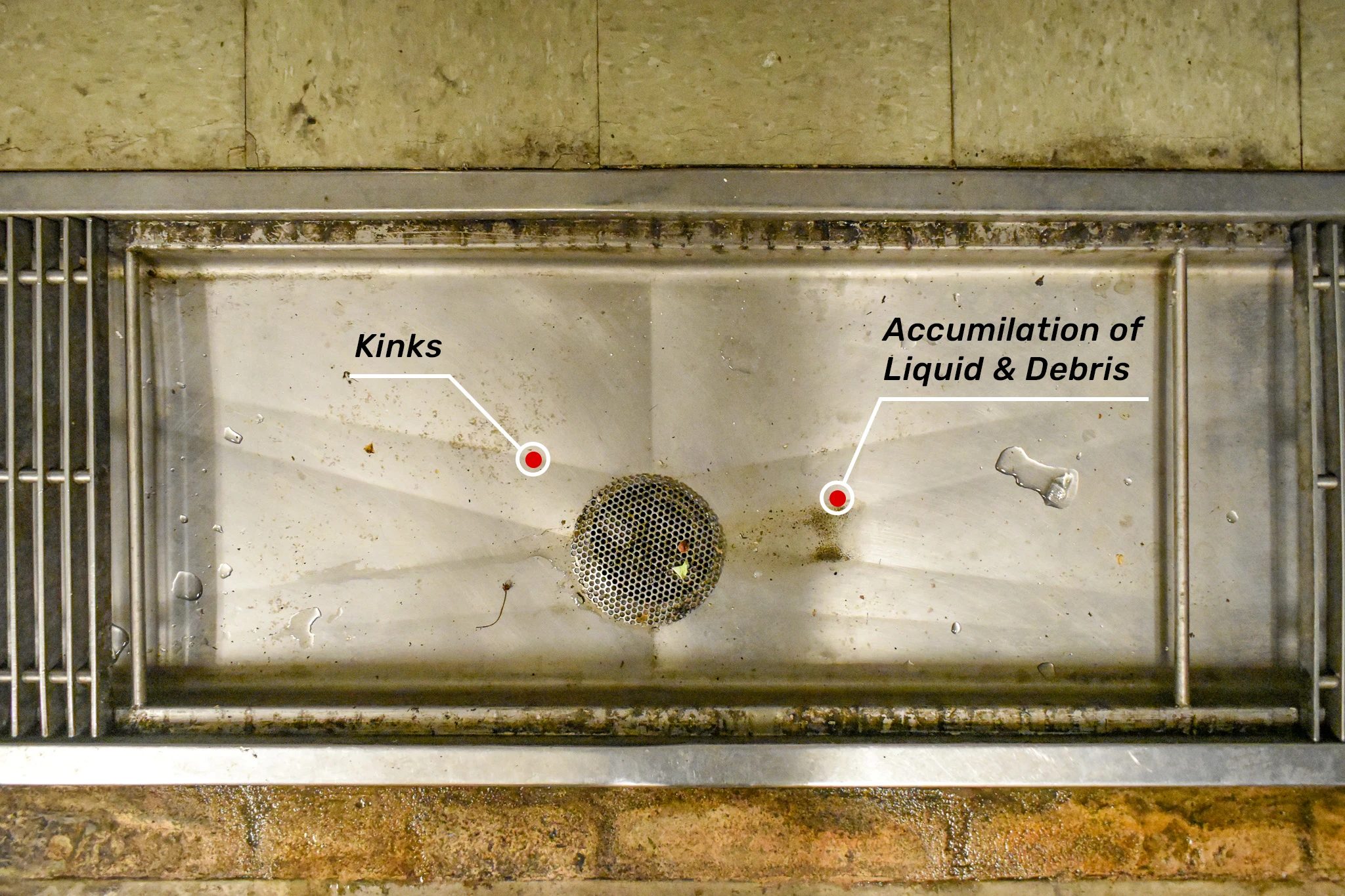
Many traditional drainage systems utilize formed “kinks” or shallow contours to encourage drainage. However, these designs may still allow water and debris to collect in low spots, creating areas where standing water can remain after use.

The Solution
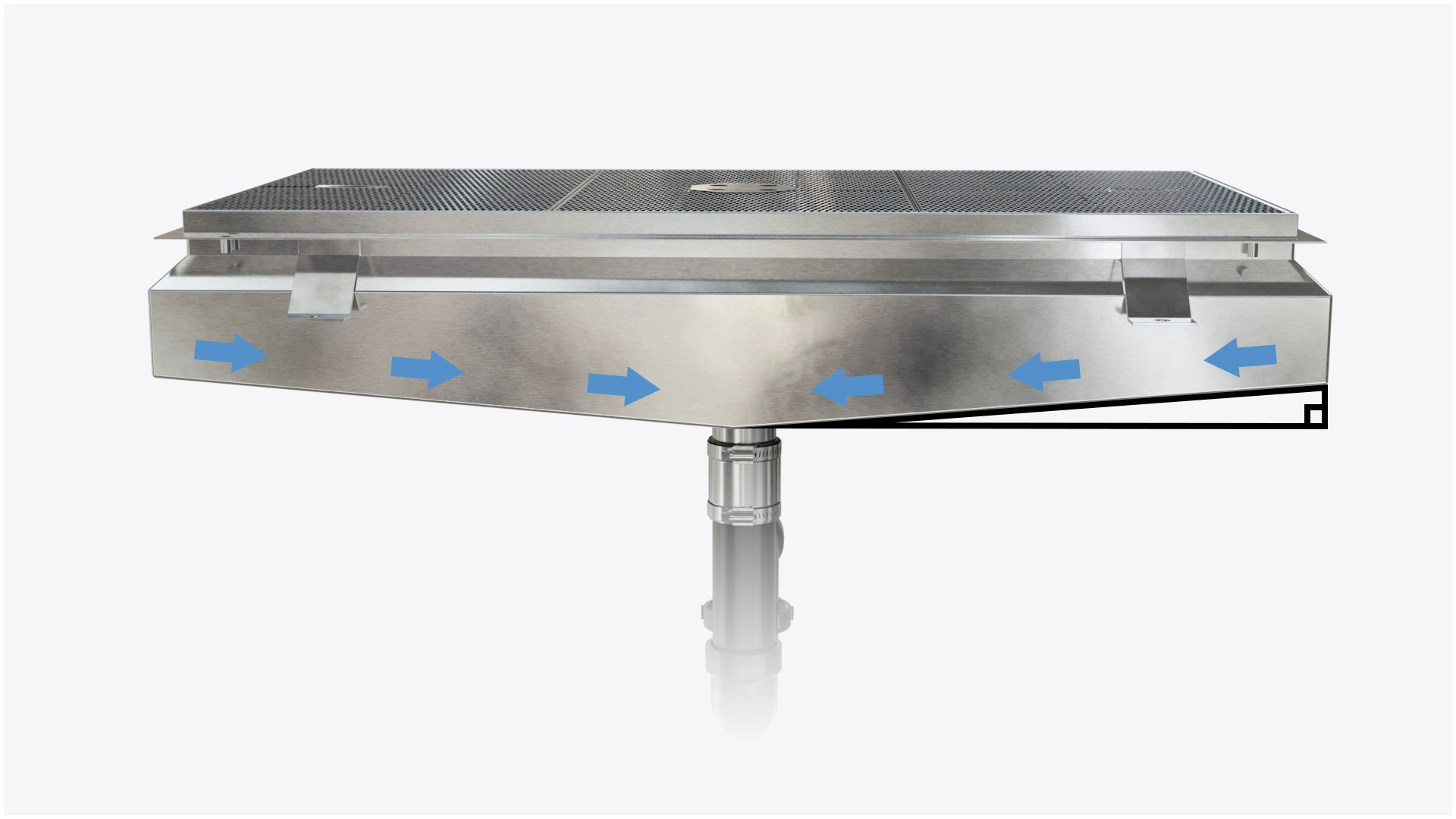
Every Streivor floor sink, floor trough, and trench drain incorporates a 5° pitched trough pan directed toward a countersunk drain opening.
This design helps ensure that wastewater and debris move efficiently toward the drain while minimizing water accumulation throughout the trough.
Benefits
Ledgeless Interior Design
The Challenge
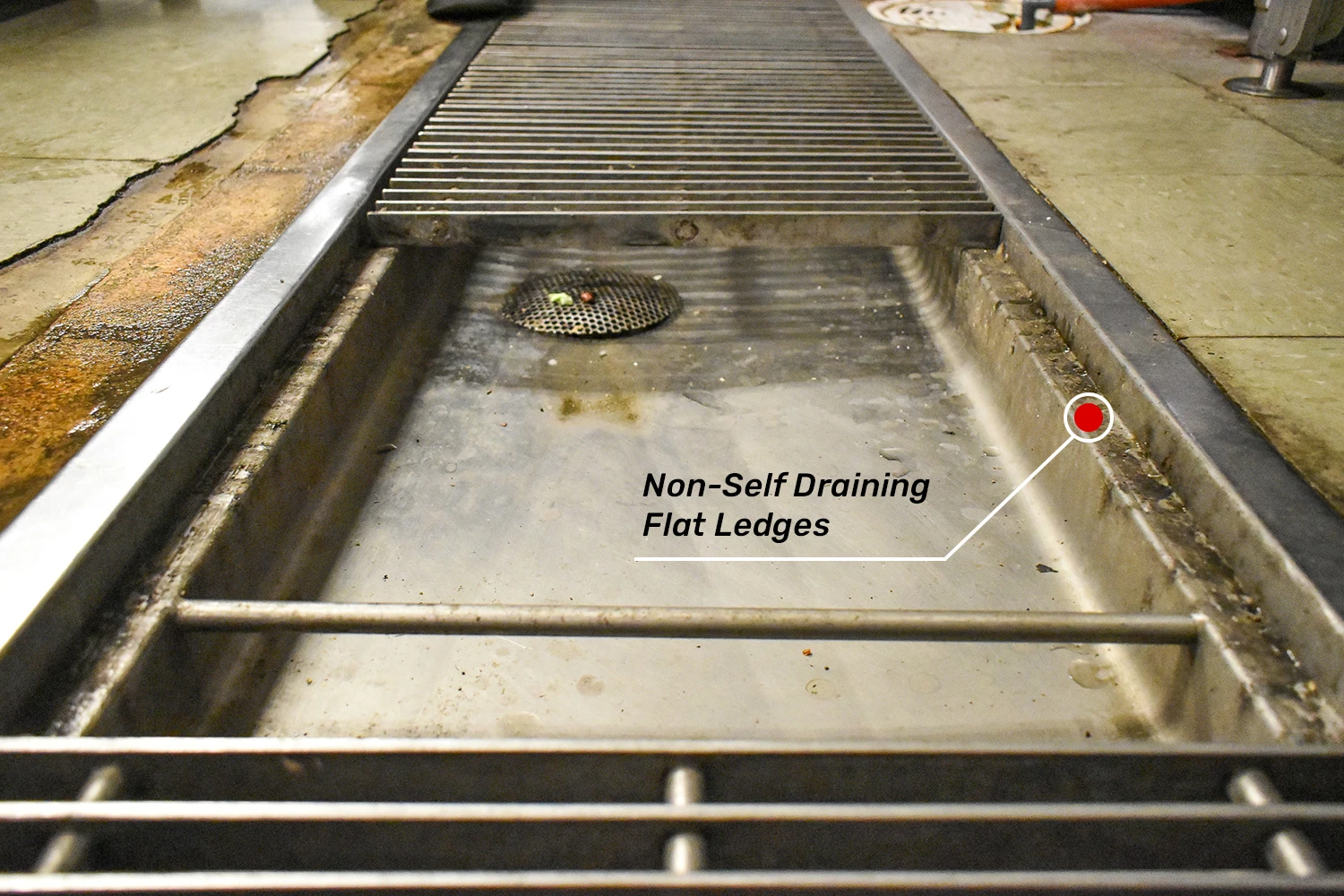
Historically, floor sinks, floor troughs, and trench drains have relied on continuous flat interior ledges to support the grate. These ledges are often non-self-draining surfaces where dirt, debris, grease, and moisture can accumulate over time.
From a sanitation perspective, these areas can create maintenance challenges and may contribute to conditions that support the harborage of vermin or the accumulation of debris.
The Solution
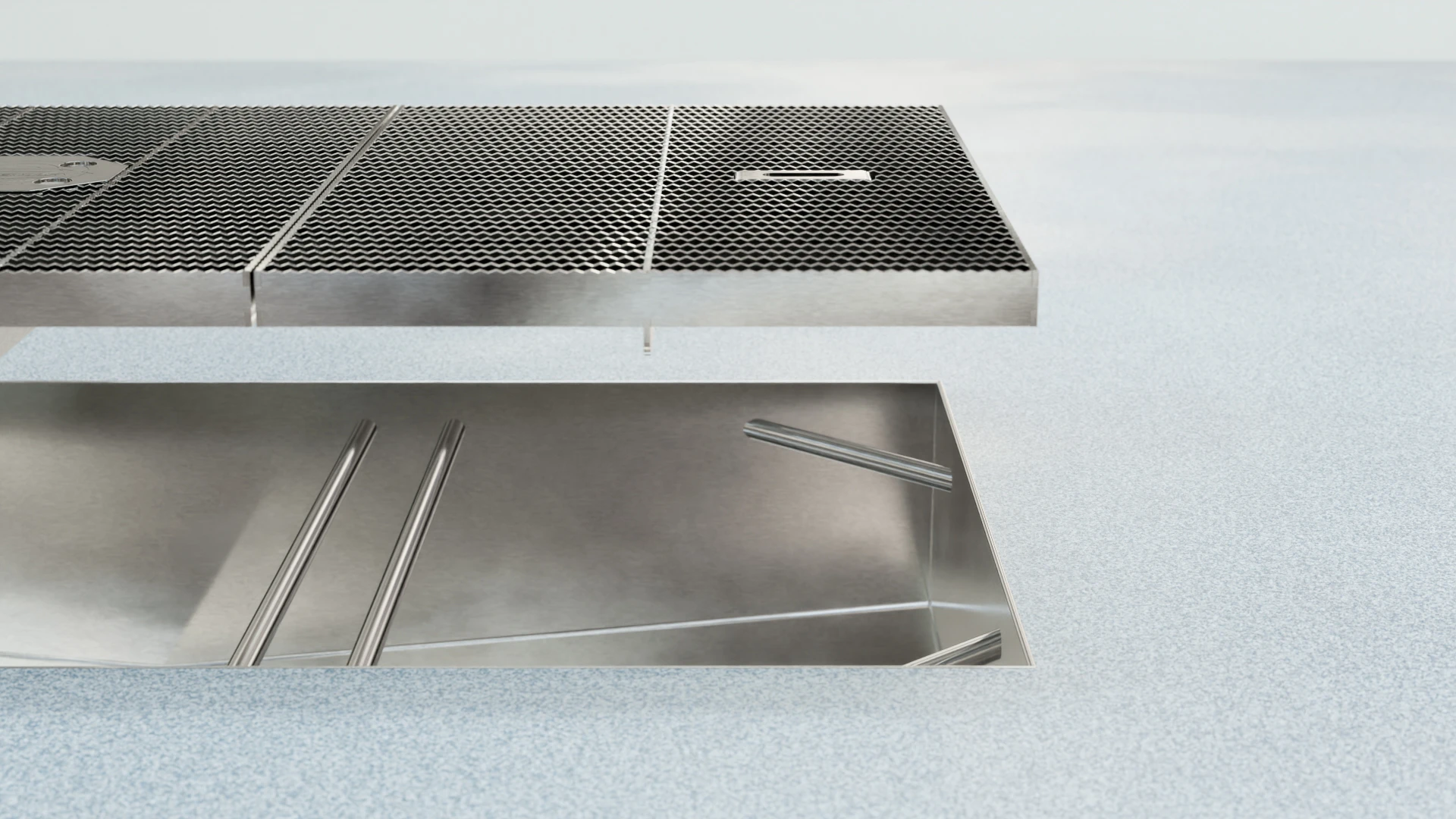
Rather than utilizing traditional interior support ledges, Streivor incorporates ½-inch stainless steel round support bars that are structurally welded within the floor trough to support the grate above.
This design eliminates continuous flat interior ledges and allows water, dirt, and debris to move freely toward the drain.
Benefits
Grate Removal Key Hole & Tool
The Challenge
Routine maintenance often requires periodic access beneath the grate. Traditional grate removal methods can involve excessive bending, kneeling, or awkward lifting.
The Solution
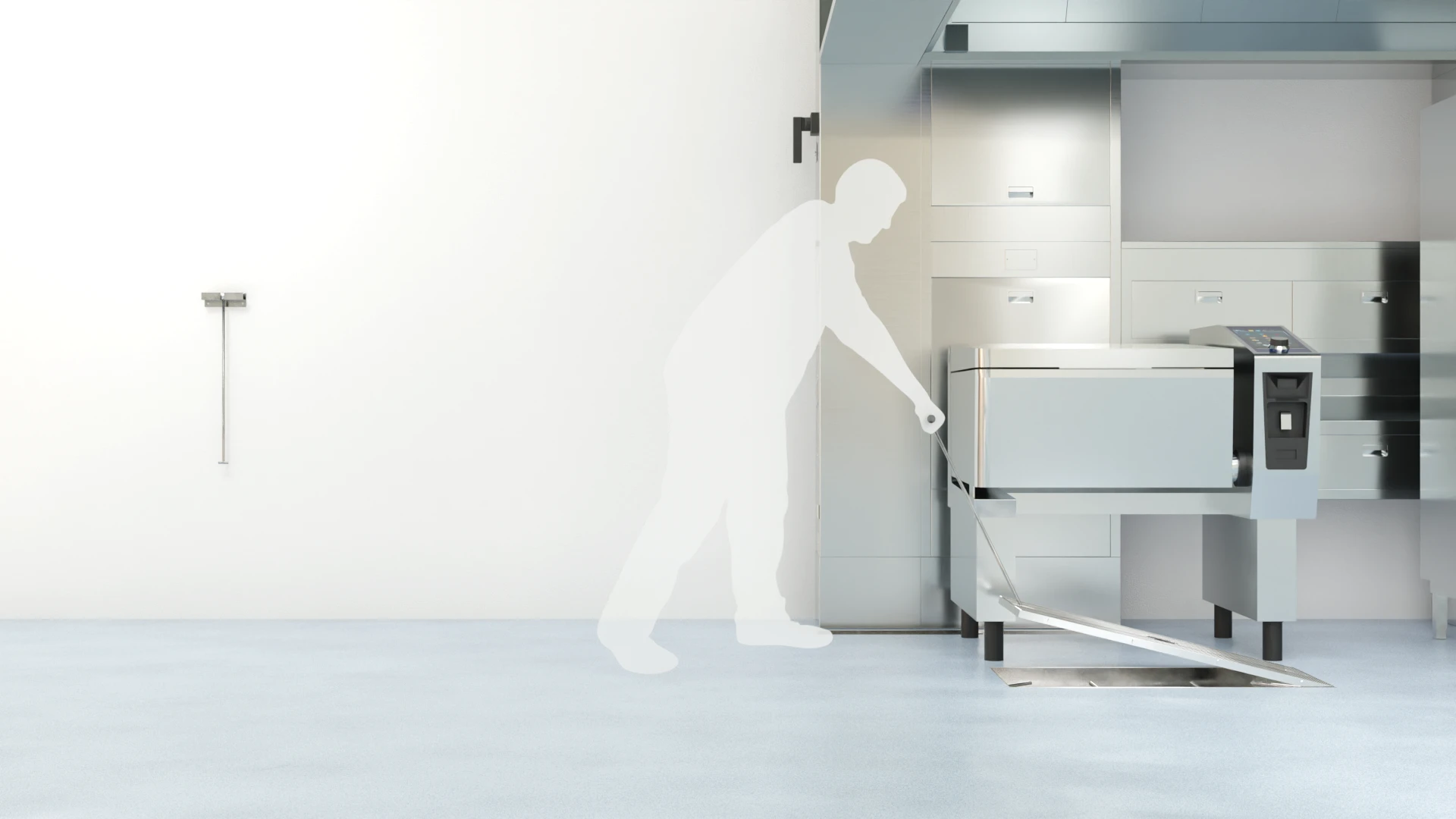
To simplify this process, Streivor incorporates integrated grate keyholes and a dedicated grate removal tool.
The tool inserts directly into the keyholes, allowing maintenance personnel to lift and reposition the non-slip grate more safely and efficiently.